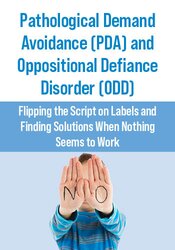
Pathological Demand Avoidance (PDA) and Oppositional Defiance Disorder (ODD): Flipping the Script on Labels and Finding Solutions When Nothing Seems to Work
And yet, the same struggles persist – aggression, shutdowns, mood swings, and more.
It can leave even the most dedicated therapists wondering – What am I missing?
For decades, diagnoses like Oppositional Defiant Disorder (ODD) and, more recently, Pathological Demand Avoidance (PDA) were viewed as signs of willful defiance, manipulation, or poor parenting but emerging research tells a different story.
Dr. Amy Marschall, clinical psychologist and neurodiversity expert, offers a paradigm shift, reframing these labels and the resulting behaviors as survival strategies rooted in trauma, neurodivergence, and developmental delay – less about “bad behavior” and more about a neurological mismatch.
Learn the root causes of ODD, PDA, IED, and more – so you can address the underlying issues, not just the symptoms
Use trauma-informed, neurodiversity-affirming assessments to decode behavior and uncover unmet needs
Apply tools that build trust, co-regulation, and emotional resilience in autistic children, kids with ADHD, PTSD, and more
Replace meltdowns, shutdowns, and aggression with interventions that promote felt safety and emotional regulation
Empower parents and educators to support regulation and healing in any setting
You’ll also learn to challenge outdated myths and labels, and support clients through insight, not control.
Purchase today and become the therapist who truly sees – and supports – the children who need it most.
Crédit
Crédit canadien - Information sur la formation continue à venir
Des informations sur les crédits de formation continue seront bientôt disponibles pour ce kit d'auto-apprentissage non interactif.
Des crédits de formation continue peuvent être disponibles pour certaines professions, comme indiqué dans le public cible. Les heures dépendront de la durée réelle de l'enregistrement. Veuillez vérifier les exigences spécifiques auprès de l'organisme d'agrément de votre État ou de votre organisation.
Des frais supplémentaires peuvent être facturés pour les certificats de formation continue. Veuillez contacter notre service clientèle au 1-800-844-8260 pour plus de détails.
**Le matériel inclus dans ce cours peut inclure des interventions et des modalités qui vont au-delà de la pratique autorisée de votre profession. En tant que professionnel agréé, vous êtes responsable de l'examen du champ d'application de la pratique, y compris des activités qui sont définies dans la loi comme dépassant les limites de la pratique, conformément aux normes de votre profession et dans le respect de celles-ci.
Amy Marschall, PsyD, is a licensed clinical psychologist in South Dakota, working primarily with children and adolescents. She is trained in trauma-informed care as well as cognitive behavioral therapy, and in 2017 became certified in trauma-focused cognitive behavioral therapy. In her clinical practice, Dr. Marschall works with survivors of abuse, families in the foster care system, children with incarcerated parents, clients dealing with high-conflict divorce or separation, and those growing up with other chronic stressors and traumas.
Dr. Marschall was diagnosed in adulthood as AuDHD (Autistic and ADHD), which informs her deeply empathetic and lived understanding of neurodivergence.
She is also the author of three professional resources: A Clinician’s Guide to Supporting Autistic Clients, Telemental Health with Kids Toolbox, and Telemental Health with Kids Toolbox, Volume 2. These publications reflect her commitment to providing accessible, neurodiversity-affirming, and trauma-informed tools for clinicians working with children and adolescents in both in-person and virtual settings.
Conférenciers Divulgations :
Financial: Amy Marschall is the founder of Resiliency Mental Health and has employment relationships with RMH Therapy, ADHD Online, Prosper Health, AuDHD Therapists, A Change for Better, A Change for Better Fund, Grayce, and DotDash Meridith. She receives royalties as a published author. Amy Marschall receives a speaking honorarium, recording, and book royalties from PESI, Inc. She has no relevant financial relationships with ineligible organizations.
Non-financial: Amy Marschall is a blogger with Resiliency Mental Health, Psychology Today, DotDash Meridith, and Everyday Health.
Movement and sensory strategies: safe spaces, sensory play, body-based tools
Routines and sleep: overcome barriers, hygiene plans, predictability across settings
Strengthen Relationships
Regulation, choice, and responsibility; developmentally matched tools
Parent-child: child-led play, check-ins, and intentional connection
Educator-student: practical tools for authentic engagement
Building inclusive, responsive classroom environments
Creative & Play-Based Interventions
Games, non-directive play, and creative outlets for big emotions
Research limitations and potential risks of misapplied strategies
Risks and limitations of common interventions
Break Through Behavioral Roadblocks
In-the-moment responses to significant behaviors
Suicide/self-harm statements
Elopement
Verbal and physical aggression
Controlling behaviors
When systems push back:
Navigate families and educators demanding strict discipline plans
Reframe resistance from adults who struggle to change
Public cible
Conseillers
Travailleurs sociaux
Psychologues
Thérapeutes conjugaux et familiaux
Orthophonistes
Enseignants
Administrateurs scolaires
Ergothérapeutes
Assistants en ergothérapie
Infirmières
Autres professionnels de l'aide qui travaillent avec des enfants
Avis
Alerte
Veuillez noter que le produit que vous achetez est une précommande et qu'il n'a pas encore été enregistré.
En général, il faut compter 4 à 6 semaines après la date du programme pour que le séminaire numérique soit disponible. Si vous décidez d'acheter, vous serez informé lorsque le produit sera prêt à être visionné.
Prix des offres groupées
Ce produit fait partie d'une offre groupée qui comprend les prix spéciaux indiqués ci-dessous.
Participant supplémentaire Test CE
Il faut acheter des crédits de formation continue supplémentaires pour chaque spectateur additionnel. Ces spectateurs regarderont la vidéo avec la personne inscrite principale, mais auront un accès individuel aux documents du cours et à la certification. Le prix standard de ce programme inclut la certification pour le spectateur principal.
Garantie de satisfaction
Votre satisfaction est notre objectif et notre garantie. Les questions doivent être adressées à info@pesicanada.com.